English
 Views: 0 Author: Site Editor Publish Time: 2026-09-08 Origin: Site
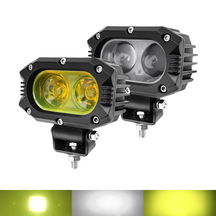
The 58 Pro is a dual-color LED light bar built for off-road trucks, UTVs, motorcycles, and farm machinery. One housing switches between a 6500K white driving beam and a 3500K amber beam, so a single SKU covers clear nights as well as dust, fog, and snow. Seven dynamic DRL modes, smart memory, and IP68/IP69K sealing complete a package aimed at distributors who want fewer SKUs and fewer warranty claims. This guide explains how it works — and how to put it to the test before you commit budget.
It removes an either/or decision. White light around 6500K carries farther on clear, dry nights, while amber light around 3500K produces less glare when the air holds dust, rain, or snow. Instead of mounting and wiring two products, customers run both beams from one LED light bar and switch between them from the cab.
The 58 Pro pairs OSRAM P8 LEDs with dual-color chips, so the main beam shifts between 3500K and 6500K while a separate amber strip serves as a position light for convoys and worksites. The platform covers a wide size range — from a 20 inch light bar up to 52 inch versions — so one product family fits truck bumpers, UTV roofs, and machinery canopies. Browse the full LED light bar collection to compare sizes.
The 52-inch version produces 8,965 lumens on 154 watts and holds 1 lux of light out to 679 meters — about two-thirds of a kilometer. One lux is roughly the brightness of a candle one meter away, which is enough to pick out a tree line, a gate, or an animal long before you reach it.
The beam is a Hi/Lo combo pattern: a narrow spot core handles the distance, while flood optics along the flanks spread light across trail edges and corners. When traffic or tight terrain calls for restraint, the Lo setting drops to a shorter, wider pattern; the Hi setting restores full reach on open ground. See the 58 Pro product page for full beam details.
That mix matters on real routes. A pickup crossing farmland at dusk needs the spot core for open paddocks and the flood flanks for gateways, ditches, and stock near the shoulder. A work truck in town needs the low pattern around other drivers. One bar, set from a switch, covers both halves of the drive.
They turn the outer LED strip into a moving light signature. Seven selectable patterns animate in white while the vehicle runs, and the amber position light keeps the bar visible when parked or rolling in convoy. In practice, they raise visibility and give retail customers a way to make one build look different from the next.
Control sits on a four-button switch wired through a waterproof harness. It toggles the main beam between amber and white, cycles the seven DRL patterns, and — through a smart memory function — restores the last-used setting every time the vehicle restarts, so drivers never reprogram their setup. The logic is well established: UN Regulation No. 87 defines daytime running lamps as their own approved class because they make vehicles easier to see in daylight.
Yes — the bar carries both IP68 and IP69K ratings. IP68 seals the housing against dust and continuous submersion. IP69K goes further and tests survival against close-range, high-pressure hot-water jets, which is how farm equipment gets cleaned and how muddy trail rigs get hosed down after a weekend.
That second rating deserves attention, because IP69K for vehicle electrical equipment is defined in ISO 20653, the road-vehicle protection standard, rather than the consumer IP scale. The housing is black die-cast aluminum with a PC lens, the LEDs are rated for 50,000+ hours — over three decades at four hours per night — and the mount kit includes one bottom bracket plus two side brackets for trucks, roll cages, and canopies.
Electrically, yes. The 12–32V DC input covers 12V motorcycles, UTVs, and pickups as well as 24V trucks and tractors. Mechanically, the bracket set and the 20-to-52-inch size range serve roof, bumper, and canopy installs. Wiring runs through 6-pin DT connectors on a heavy-duty harness — a common off-road standard — so the bar plugs into many existing setups without cutting or splicing.
Regulatory context differs by market, and it is worth checking before you stock. Europe assesses auxiliary driving lamps under UN R149; the United States classifies auxiliary high beam lamps under SAE J581; Australia manages vehicle lighting through its ADR framework; and South Africa applies ECE-aligned requirements. Ask a supplier for market-specific documentation before placing a purchase order — a factory exporting to these regions should have clear answers.
Sample it the way your customers will use it. Mount a unit on a test vehicle, run the amber beam in dust, wash it under pressure, and cycle the DRL modes for a week. Switches, memory chips, and seals either survive that routine or they do not — a week of honest testing tells you more than any spec sheet.
The short version: this LED light bar combines a white driving beam, an amber beam, seven DRL modes, and IP68/IP69K sealing in one housing — from a 20 inch light bar to 52-inch versions, wired for 12–32V vehicles. If that fits your range, request a sample or apply for a trial unit through our contact page. The same factory builds work lights, motorcycle auxiliary lights, and control panels, so you can consolidate sourcing with one supplier.